

Imagine walking down King Street on a humid Tuesday afternoon in July 2026, where the 85% Lowcountry humidity makes even a short stroll feel like a marathon. For many Charleston residents, the real challenge isn't just the heat; it's managing tirzepatide side effects like sudden nausea or fatigue while trying to stay productive at the office. You shouldn't have to choose between your transformative weight loss goals and your active lifestyle in the Holy City.
It's natural to feel anxious about how a new medication affects your long-term health, especially when you're balancing a demanding career and a full social calendar. This guide provides a practical toolkit to identify and minimize symptoms under the expert care of local medical professionals. You'll discover how to maintain proper hydration in the South Carolina sun, handle digestive shifts with confidence, and access concierge-style medical supervision that brings clinical expertise directly to your door. We'll outline the exact steps to manage your wellness journey safely while keeping your daily routine entirely intact.
Key Takeaways
- Understand how Tirzepatide’s dual-hormone mechanism affects your digestion to better prepare for your weight loss journey.
- Learn to navigate common tirzepatide side effects like nausea while staying ahead of dehydration in Charleston’s unique climate.
- Discover the critical differences between minor adjustment symptoms and serious medical signs that require immediate expert attention.
- Master proactive strategies, including specialized meal prepping and hydration protocols, to maintain your lifestyle without interruption.
- Explore how Hydreight’s elite telehealth model provides on-demand medical oversight for safe, customized dosage adjustments from your home.
Understanding Tirzepatide Side Effects: Why Your Body Reacts
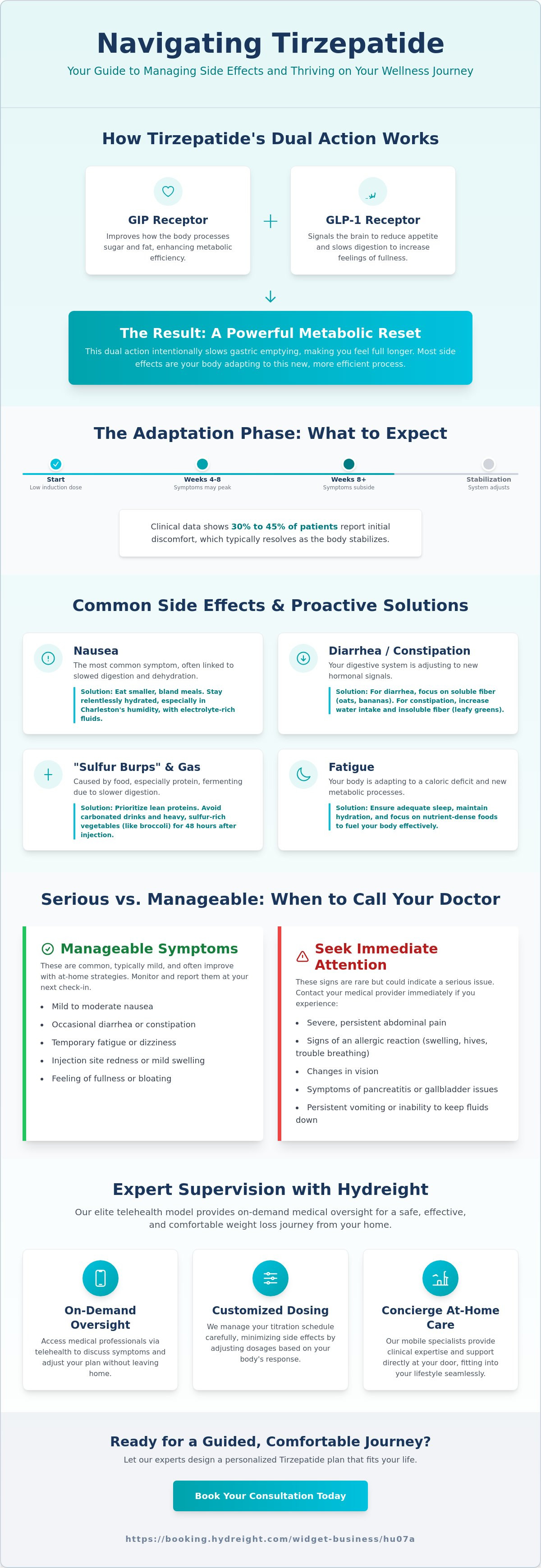
Tirzepatide represents a significant shift in metabolic medicine, acting as the first dual agonist for both glucose-dependent insulinotropic polypeptide (GIP) and glucagon-like peptide-1 (GLP-1) receptors. While traditional treatments often target a single pathway, this medication mimics two distinct hormones to optimize how your body processes energy. Most tirzepatide side effects stem directly from these primary functions, particularly the intentional slowing of gastric emptying. This process ensures you feel full longer, but it also requires a period of physiological adaptation. Clinical data from the SURMOUNT trials indicates that while 30% to 45% of patients report initial discomfort, these symptoms typically peak during the first 4 to 8 weeks before subsiding as your system stabilizes.
The Science of GIP and GLP-1 Receptors
The dual-action approach targets both the gut and the brain to regulate appetite more effectively than older monotherapies. While GLP-1 is known for its role in insulin secretion and appetite suppression, GIP adds a layer of metabolic efficiency by improving lipid metabolism and potentially reducing the nausea often associated with GLP-1 alone. This brain-gut connection signals the hypothalamus to reduce cravings while simultaneously managing blood sugar levels. Tirzepatide functions as a dual-action metabolic reset that recalibrates your body's relationship with hunger and energy storage for 2026 standards. By utilizing certified providers for your wellness journey, you ensure these receptors are stimulated safely and effectively.
Why Digestive Slowing Causes Discomfort
The primary way this medication works is by creating a controlled, gastroparesis-like slowing of the digestive tract. This delay in stomach emptying is what triggers early satiety, making it easier to maintain a caloric deficit without the stress of constant hunger. However, this transition period can lead to temporary digestive shifts as your body adjusts to new insulin signaling patterns. You'll find that tirzepatide side effects are largely dose-dependent. Starting with a low 2.5 mg induction dose helps minimize these "off-target" reactions. As you progress, your digestive system becomes more efficient at processing nutrients under these new conditions. If you're ready to start your journey with professional guidance, you can book a consultation with a mobile specialist to discuss a personalized titration schedule.
- Slower Digestion: Extends the time food stays in the stomach to promote fullness.
- Hormonal Shift: Adjusts how the brain perceives hunger and reward signals.
- Dose Sensitivity: Symptoms often correlate with the speed of dosage increases.
Common Gastrointestinal Symptoms for Charleston Patients
Most patients beginning their wellness journey in 2026 will experience some form of digestive adjustment. The most frequent tirzepatide side effects reported include nausea, diarrhea, and constipation. These symptoms typically occur because the medication mimics GLP-1 and GIP hormones, which slow down gastric emptying. According to this clinical overview of Tirzepatide side effects, these reactions are usually dose-dependent. This means symptoms often peak during the titration phase when your provider increases your dosage every four weeks. Managing these transitions is easier when you understand the biological process behind them.
One specific symptom that surprises many is the "sulfur burp." This happens when protein stays in the stomach longer than usual because of slowed digestion, leading to fermentation and the release of hydrogen sulfide gas. You can minimize this by prioritizing lean proteins and avoiding heavy, sulfur-rich vegetables like broccoli or cauliflower during the first 48 hours after your injection. If you feel overwhelmed by these shifts, you can schedule a professional consultation to refine your protocol and ensure your comfort.
Managing Nausea in the Lowcountry Heat
Charleston’s climate poses a unique challenge for those managing tirzepatide side effects. In 2025, humidity levels in the Lowcountry averaged over 70%, which can interfere with the body's natural cooling mechanisms. High humidity makes nausea feel significantly more intense because it masks early signs of dehydration. When you don't sweat efficiently, your core temperature rises, exacerbating the queasiness associated with the medication. Maintain a strict electrolyte balance by adding mineral drops to your water. During peak summer months, utilize "cooling zones" by applying cold compresses to your neck or wrists immediately if you feel a wave of nausea approaching.
Dealing with Heartburn and Bloating
Slowed digestion means food sits in the stomach longer, which can trigger acid reflux if you aren't careful with timing. Avoid lying down for at least three hours after your evening meal to prevent stomach acid from backing up into the esophagus. Smaller, more frequent meals are more effective than three large ones, as they don't overwhelm the digestive tract. While these adjustments require discipline, the trade-off is clear when you review the Tirzepatide weight loss results typically seen by local residents. Proactive management ensures you stay comfortable while achieving your target weight with confidence.
Serious vs. Manageable Side Effects: When to Call Your Doctor
Most Charleston patients experience mild nausea or fatigue during the first four weeks of treatment. These are standard adjustment symptoms as your body adapts to the dual-agonist mechanism. However, you must distinguish these from clinical emergencies to protect your health. Understanding the spectrum of tirzepatide side effects helps you stay empowered during your transformation. Your wellness journey requires proactive monitoring by a certified provider who can provide professional confidence when questions arise. This elite level of care ensures that your path to health remains safe and efficient.
Red Flags: Pancreatitis and Gallbladder Issues
Pancreatitis occurred in less than 1% of clinical trial participants, but it requires immediate medical intervention. You should monitor for specific symptoms that indicate a serious reaction rather than manageable tirzepatide side effects. Contact a medical professional immediately if you experience:
- Severe abdominal pain that radiates through to your back.
- Persistent vomiting that prevents you from keeping liquids down.
- Intense tenderness when touching the stomach area.
- A rapid heartbeat accompanied by a fever.
Rapid weight loss can also trigger gallbladder issues. Clinical data from 2024 suggests that gallbladder-related events, such as gallstones, occur in approximately 0.6% of patients. Watch for sharp pain in the upper right abdomen, particularly after consuming a meal. Furthermore, severe gastrointestinal upset can lead to dehydration, which potentially impacts kidney function. If you cannot maintain hydration, you should seek on-demand medical support to stabilize your system. Certified providers can help you manage these risks through personalized telehealth oversight.
Tirzepatide vs. Semaglutide: Side Effect Comparison
Choosing the right peptide is a personal decision that impacts your daily comfort. Tirzepatide acts on both GLP-1 and GIP receptors. Some clinical evidence suggests this dual action may offer a smoother experience for certain users compared to single-receptor agonists. Many Charleston residents switch between these options to find the best gastrointestinal tolerability for their specific biology. While both medications share similar profiles, the dual-agonist nature of tirzepatide might lead to different responses in appetite suppression and digestive speed. For a detailed breakdown of these differences, read our Tirzepatide vs. Semaglutide comparison guide. Professional oversight ensures you aren't guessing which protocol fits your lifestyle, allowing you to focus on your results rather than the friction of the process.
Proactive Strategies to Minimize Side Effects at Home
Managing tirzepatide side effects effectively starts with a structured routine that accounts for the unique climate and lifestyle of the Lowcountry. Because this peptide influences how your body processes nutrients and fluids, your daily habits must evolve to maintain comfort. Success in 2026 depends on being proactive rather than reactive, ensuring your wellness journey remains uninterrupted by manageable symptoms.
The Charleston Hydration Rule for Peptide Therapy
The combination of South Carolina humidity and GLP-1 therapy increases your risk of dehydration. We recommend a strict intake of 80 to 100 ounces of water daily. Effective hydration in Charleston requires replacing both water and essential minerals lost through perspiration and peptide-induced diuresis. Simply drinking plain water isn't enough; you should incorporate medical-grade electrolytes to maintain cellular balance. You should also limit caffeine to one cup per day. Excessive stimulants can exacerbate the jitteriness or heart rate fluctuations sometimes associated with tirzepatide side effects, leading to unnecessary discomfort during your work week.
Dietary Adjustments for Local Seafood and Dining
Charleston is a culinary hub, but certain local favorites can trigger gastrointestinal distress while on this medication. High-fat "Lowcountry boils" are particularly problematic. The heavy butter and spice profile can cause immediate nausea or bloating because tirzepatide slows gastric emptying. When dining at local seafood spots, choose grilled or blackened options over fried platters. Incorporating specific local produce can also aid digestion. Look for fresh ginger at the Charleston City Market to brew into tea, or prioritize high-fiber greens from local farms to keep your digestive system moving efficiently.
Meal Prepping Checklist for GI Comfort:
- Prioritize 25-30 grams of lean protein per meal to prevent muscle loss.
- Avoid all deep-fried foods, which can sit in the stomach for extended periods.
- Portion meals into smaller containers; eating large volumes at once is a primary trigger for reflux.
- Include a source of soluble fiber, like oats or beans, to stabilize bowel movements.
Fatigue is another common hurdle, but the "clean energy" movement offers a solution. Instead of reaching for sugary energy drinks, engage in low-impact movement. A 15-minute walk along the Battery can stimulate circulation and reduce the lethargy often felt 24 to 48 hours after an injection. Timing your dose is equally vital. Administering your injection on Friday evening allows you to navigate the peak medication levels during the weekend, minimizing potential disruptions to your professional schedule.
If you need professional support to manage your hydration or nutrient levels, you can book a mobile wellness consultation to receive personalized care at your home.
Expert Supervised Weight Loss in Charleston, SC
Managing tirzepatide side effects requires more than just reading a pamphlet. It demands real-time clinical oversight from experts who understand your unique biology. Hydreight’s telehealth model bridges the gap between sophisticated medical treatment and your daily life in Charleston. By working with licensed providers who understand the local Lowcountry lifestyle, you gain a dedicated partner in your wellness journey. These clinicians monitor your progress virtually, ensuring that any discomfort doesn't derail your long-term goals. Safety isn't a one-time checkup; it's an ongoing conversation.
Virtual consultations allow for rapid dosage adjustments that traditional clinics often can't match. If you encounter unexpected symptoms, you don't have to wait weeks for an office visit. You can connect with a professional who can pivot your treatment plan immediately. This proactive approach transforms side effect management from a solo struggle into a collaborative partnership. You're never left guessing about your health when expert advice is just a tap away.
Benefits of Telehealth Oversight via Hydreight
Charleston professionals often juggle demanding schedules at companies like Boeing or Blackbaud. Traditional clinic visits can feel like a burden that eats into your productivity. Our "at-home" medical weight loss approach removes that friction entirely. You can book a telehealth consultation in Charleston to receive immediate support from your office or living room. This direct access is vital for maintaining momentum. Personalized care plans help reduce the "trial and error" of managing symptoms, as your provider can fine-tune your regimen based on your specific feedback and lifestyle needs.
Personalized Dosing Schedules to Reduce Sensitivity
Every body reacts differently to metabolic changes. A one-size-fits-all approach fails for many weight loss patients because it ignores individual sensitivity. To mitigate tirzepatide side effects, our providers often implement "micro-dosing" or slower titration schedules. Data from 2025 clinical observations suggest that extending the titration period by just 14 days can improve patient adherence rates by 30 percent. We prioritize your comfort over rigid, universal protocols.
- Custom Titration: We move at your body's pace, not a manufacturer's chart.
- Symptom Mapping: We track your reactions to identify triggers for nausea or fatigue.
- Direct Communication: You have a line to licensed clinicians for peace of mind.
Your clinician will collaborate with you to find the precise balance that triggers weight loss without overwhelming your system. This level of customization is the hallmark of premium medical care in 2026. Schedule your Charleston medical weight loss assessment today to begin your supervised transformation with confidence.
Empower Your Wellness Transformation in Charleston
Managing tirzepatide side effects shouldn't feel like a barrier to your health goals. Clinical data from the 2022 SURMOUNT-1 trial shows that while gastrointestinal symptoms affect many patients during the initial dose escalation, these effects are typically transient and manageable with expert oversight. You've gained the tools to distinguish between routine adjustments and symptoms that require professional medical attention. Success in 2026 relies on a foundation of clinical safety and personalized care. Hydreight connects you with licensed medical providers who oversee every aspect of your weight loss plan. Through our digital health platform, you'll enjoy on-demand telehealth access that fits your busy lifestyle. We deliver personalized Tirzepatide protocols tailored to your specific needs, ensuring your journey is as comfortable as it is effective. Don't settle for a one-size-fits-all approach when you can have a high-end, medically backed experience. Your path to a healthier version of yourself starts with the right partner and a plan built for your success.
Start your medically supervised weight loss journey in Charleston today
Frequently Asked Questions
Is it normal to feel extremely tired during the first week of Tirzepatide?
Yes, feeling tired is a documented side effect for approximately 9% of users during the initial phase of treatment. This fatigue often stems from the body adjusting to a lower caloric intake and significant metabolic shifts. Ensure you're hitting your daily protein targets and staying hydrated to maintain your energy levels as your system adapts to the medication.
How can I stop the "sulfur burps" associated with Tirzepatide?
You can reduce sulfur burps by avoiding heavy, sulfur-rich foods like broccoli or red meat in the 24 hours before your injection. These burps happen because the medication slows your digestion, causing food to stay in your stomach longer. Drinking 8 ounces of water with a squeeze of lemon or taking an over-the-counter antacid can help neutralize the odor quickly.
Can I drink alcohol while taking Tirzepatide in Charleston?
You can consume alcohol in moderation, but be aware that it may increase the intensity of tirzepatide side effects like nausea or dizziness. Charleston's social scene offers plenty of options, but sticking to one drink is safer since alcohol can trigger sharp blood sugar drops. Our certified providers recommend prioritizing hydration with electrolyte-infused water between any alcoholic beverages to protect your wellness journey.
What should I do if I miss a dose of Tirzepatide?
Take your missed dose as soon as you remember, provided it's within 4 days of the scheduled date. If more than 96 hours have passed, skip the dose entirely and wait for your next regularly scheduled injection. Don't take two doses within 3 days of each other, as this significantly increases the risk of severe gastrointestinal distress.
Does Tirzepatide cause hair loss, and is it permanent?
Tirzepatide doesn't directly cause hair loss; rather, the rapid weight loss can trigger a temporary condition called telogen effluvium. Data from the 2022 SURMOUNT-1 clinical trial showed that roughly 6% of participants experienced some thinning. This shedding isn't permanent and typically resolves within 6 months as your nutrition stabilizes and your body reaches a weight plateau.
What is the best time of day to take my Tirzepatide injection to avoid side effects?
Many residents find that injecting in the evening, about 2 hours before bed, helps them sleep through the peak of any initial nausea. This timing allows the medication to reach its first concentration peak while you're resting. Choosing a consistent time every 7 days helps maintain a steady level of the hormone in your system, which minimizes the sharpest tirzepatide side effects.
How long do the digestive side effects usually last?
Digestive side effects typically peak during the first 4 weeks of treatment and subside as you maintain a consistent dose. Most patients report that nausea and diarrhea resolve after the second or third month of the 72-week treatment protocol. If you increase your dosage, you might experience a brief 48-hour recurrence of these symptoms before your body recalibrates again.
Can I take over-the-counter nausea medication with Tirzepatide?
You can safely use over-the-counter options like Dramamine or 25mg of Vitamin B6 to manage nausea. These supplements work well alongside your treatment to keep you comfortable while you go about your day in Charleston. Always consult with your on-demand provider through the app to ensure these additions fit perfectly into your personalized wellness plan.
Disclaimer
DISCLAIMER: The information provided on this website and in associated articles is for educational and informational purposes only and is not intended as medical advice, diagnosis, or treatment.
No Nurse-Patient Relationship: Accessing this content does not establish a professional-patient relationship. A clinical relationship is only formed after a formal medical consultation, screening, and signed informed consent with The Peptide Nurse.
Prescription Requirements: GLP-1 medications (such as Semaglutide and Tirzepatide) and Sermorelin are prescription-only medications that require medical oversight. These treatments carry potential risks and side effects and are not suitable for everyone. Always seek the advice of a qualified healthcare provider regarding your specific medical condition. Never disregard professional medical advice or delay seeking it because of something you have read here.
Results Disclaimer: Weight loss and wellness outcomes are individualized and vary based on personal health profiles, metabolic factors, and adherence to program protocols. Specific results are not guaranteed. [The Peptide Nurse] operates in compliance with state and federal telehealth regulations; services are available only in jurisdictions where the provider is licensed.
AI-Assisted Content: Some content on this site may be generated with the assistance of AI and is reviewed for clinical accuracy by our professional staff.