

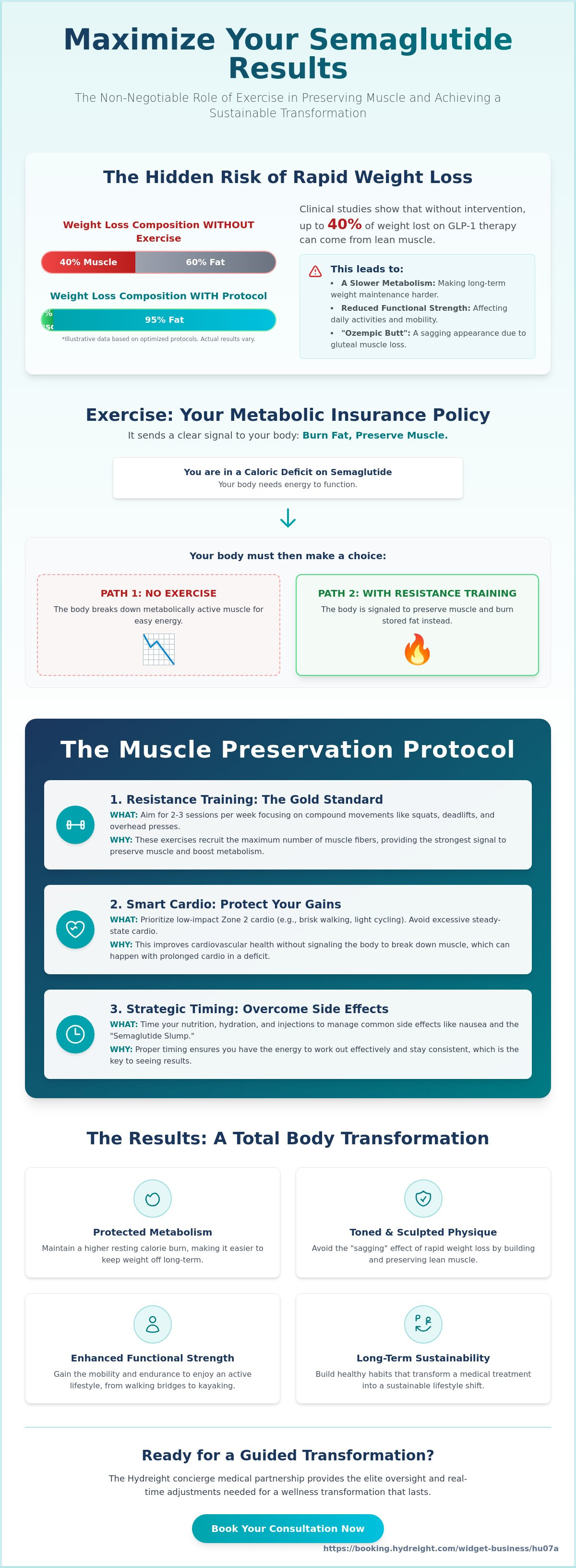
Research published in the New England Journal of Medicine indicates that without targeted intervention, nearly 40% of weight lost during GLP-1 therapy can come from lean muscle tissue rather than fat stores. While seeing the numbers on the scale drop is an incredible victory, losing the muscle that powers your metabolism is a setback you can easily avoid. We understand that managing fatigue and sudden nausea makes it difficult to prioritize exercise while on semaglutide, especially when your energy levels feel depleted before you even reach the gym. You shouldn't have to choose between rapid weight loss and a toned, functional physique.
This guide shows you how to optimize your fitness routine to preserve muscle and boost metabolic health right here in Charleston. We'll explore specific resistance training protocols and hydration strategies that turn your weight loss journey into a total body transformation. From managing workout-induced nausea to sustaining energy for long-term maintenance, you'll discover the professional strategies needed to achieve a sculpted result that lasts well after your final dose.
Key Takeaways
- Discover why resistance training is the clinical gold standard for preserving lean muscle mass and protecting your metabolic health during weight loss.
- Learn how to safely integrate exercise while on semaglutide by leveraging low-impact Zone 2 cardio and Charleston’s iconic Ravenel Bridge.
- Identify professional strategies for timing your nutrition and injections to overcome common barriers like nausea and the initial "Semaglutide Slump."
- Understand how a concierge medical partnership provides the elite oversight and real-time adjustments needed for a sustainable wellness transformation.
Why Exercise is Non-Negotiable During Semaglutide Treatment
While Semaglutide is a revolutionary tool for appetite suppression and glycemic control, it's not a selective fat burner. The medication works by mimicking GLP-1 hormones to reduce hunger, but your body needs a reason to keep its muscle. Without the right stimulus, your system may break down lean tissue to meet its energy needs during a caloric deficit. This is why exercise while on semaglutide is the most critical factor in determining the quality of your weight loss.
Clinical data from the STEP 1 trials indicates that without intervention, up to 39% of the weight lost on GLP-1 medications can come from lean muscle mass rather than fat. This loss is more than just a cosmetic concern. Muscle is your primary metabolic engine. When you lose muscle, your resting heart rate and daily calorie burn drop, making it significantly harder to maintain your results long term. You can think of physical activity as a metabolic insurance policy that protects your strength while the medication handles the fat stores.
To better understand the synergy between medication and movement, watch this helpful video:
You've likely heard of the "Ozempic butt" phenomenon. This isn't a side effect of the drug itself, but rather the result of gluteal muscle wasting. When weight drops rapidly, the muscles in the lower body can atrophy if they aren't being challenged. Consistent, targeted resistance training prevents this sagging effect, ensuring your new silhouette is toned and healthy rather than just smaller.
The Science of Muscle Sparing
Resistance training sends a clear biochemical signal to your body to prioritize burning stored fat over muscle tissue. This process is enhanced by the way the medication stabilizes your blood sugar. Because semaglutide prevents the peaks and valleys in glucose levels, you'll often find you have more consistent endurance for your workouts. Muscle wasting in the context of rapid medical weight loss is the involuntary degradation of skeletal muscle fibers that occurs when the body lacks sufficient mechanical stress and protein to maintain its structural mass.
Beyond the Scale: Functional Health in Charleston
Maintaining muscle improves your mobility for Charleston's active outdoor lifestyle. Whether you're walking the Ravenel Bridge or kayaking through Shem Creek, you need functional strength to enjoy everything the Lowcountry offers. Lean mass is also the primary predictor of long term weight maintenance once your protocol ends. Charleston residents should view exercise while on semaglutide as a necessary partner to their semaglutide Charleston SC journey. It transforms a medical treatment into a sustainable lifestyle shift that lasts well beyond the final injection.
The Muscle Preservation Protocol: What to Prioritize
Rapid weight loss often comes with a hidden cost: the loss of lean muscle mass. When you prioritize exercise while on semaglutide, your primary goal is to signal to your body that muscle is a vital asset, not an energy source to be burned. Resistance training stands as the clinical gold standard for anyone on a medical weight loss protocol. You should aim for compound movements such as squats, deadlifts, and overhead presses at least 2 to 3 times per week. These multi-joint exercises recruit the maximum amount of muscle fibers, providing the strongest metabolic stimulus.
According to the Exercise Guidelines for Semaglutide Users, maintaining strength is crucial even if total lean mass decreases slightly. This clinical perspective highlights how resistance training offsets the fatigue often associated with GLP-1 medications. By focusing on strength, you ensure the weight you lose comes primarily from adipose tissue rather than the functional muscle that supports your metabolism.
Avoid the common trap of excessive steady-state cardio. While walking is beneficial for general health, spending hours on a treadmill while in a significant caloric deficit can actually accelerate muscle loss. This happens because the body may break down muscle tissue to meet energy demands when a resistance stimulus is absent. Focus on progressive overload instead. You must gradually increase the weight or resistance used in your sessions to continue signaling muscle growth to your nervous system. Even a 5 percent increase in weight every two weeks can make a measurable difference in your long-term results.
Strength Training Basics for Beginners
If you haven't stepped into a gym in years, start with bodyweight foundations. Move from air squats and push-ups to free weights once your form is stable. Focus on the Big Five movements: squats, hinges, pushes, pulls, and core carries. For maximum hypertrophy and muscle retention, keep your rep ranges between 8 and 12. This specific range provides enough tension to maintain your metabolic engine without the high injury risk of extreme heavy lifting. Efficiency is key; 45-minute sessions are often more effective than two-hour marathons when you are adjusting to a new metabolic profile.
The Role of Protein Timing
Caloric deficits on semaglutide require a strategic increase in protein intake. You should aim to increase your daily protein by roughly 20 to 30 percent to protect your tissues as you lose weight. The anabolic window is a critical 60-minute period following your workout where your body is primed for recovery. Consuming high-quality protein during this time ensures your muscles have the building blocks they need to repair. Integrating professional nutrients for weight management can further optimize this recovery phase, ensuring your body receives medical-grade support as you navigate your wellness journey. This proactive approach to nutrition ensures that your hard work in the gym translates into a toned, healthy physique.
A Charleston-Specific Fitness Plan for Semaglutide Users
Focus your initial efforts on "Zone 2" cardio. This low-intensity state keeps your heart rate between 60% and 70% of its maximum. It's the most effective way to burn fat without triggering the nausea or fatigue that sometimes accompanies your injections. Harvard research highlights that maintaining muscle mass on semaglutide requires a strategic mix of aerobic and resistance work. In Charleston, our geography offers the perfect natural gym for these goals. By utilizing the local landscape, you can stay active while respecting your body's adjustment period to the medication.
Incorporate Local Movement
The Arthur Ravenel Jr. Bridge is your best tool for incline training. The 2.5-mile pedestrian path features a 5.7% grade that challenges your cardiovascular system without the impact of running. Start at the Mount Pleasant side and walk to the first diamond pier at a steady, conversational pace. This activates your glutes and calves, which is essential for metabolic health.
For a different challenge, head to Sullivan's Island. Walking on damp sand at low tide provides 2.1 times more resistance than pavement. This naturally strengthens your lower body and improves ankle stability. If you prefer upper body engagement, kayaking on Shem Creek offers a low-impact core workout. These local activities ensure that exercise while on semaglutide remains engaging and sustainable.
Managing the South Carolina Heat
Charleston’s humidity frequently exceeds 90% during the summer. Because semaglutide can alter your fluid regulation, you face a higher risk of dehydration. You must pre-hydrate. Drink 16 ounces of water with added electrolytes 30 minutes before any outdoor activity. If you feel a headache or sudden dizziness, stop immediately. These symptoms can be side effects of the medication, but in the Lowcountry, they are often early warnings of heat exhaustion.
Schedule your outdoor sessions during the "Lowcountry Cool," typically before 8:00 AM or after 7:00 PM. When the heat index surpasses 100 degrees, move your exercise while on semaglutide indoors. Facilities like the MUSC Wellness Center or boutique studios in Midtown provide climate-controlled environments. If you find it difficult to maintain hydration levels during your fitness journey, you can book a professional IV hydration treatment at https://booking.hydreight.com/widget-business/hu07a to restore your electrolyte balance quickly and safely.
Managing Side Effects and Fatigue While Working Out
Nausea remains the primary barrier for patients attempting to exercise while on semaglutide, affecting approximately 44% of individuals during the initial titration phase. Managing this requires a strategic approach to meal timing and physical exertion. You should avoid eating heavy, high-fat meals at least 2 hours before hitting the gym. Because semaglutide slows gastric emptying, food stays in your stomach longer, and intense movement can trigger reflux or significant discomfort.
Many Charleston residents report a "Semaglutide Slump" during the first 4 weeks of treatment. This period of systemic fatigue occurs as your metabolism adapts to a lower caloric intake and the medication's hormonal shifts. If you feel drained, don't force a high-intensity interval training session. Instead, prioritize gentle movement like a sunset walk on the Battery or light stretching. This keeps your lymphatic system moving without overtaxing your central nervous system.
In the Charleston heat, where humidity often exceeds 80%, plain water isn't enough to sustain your performance. Semaglutide can sometimes dull your natural thirst cues, making dehydration a silent risk. Electrolytes are essential to prevent medication-induced dizziness. You must learn to distinguish between a "good" muscle burn and "bad" dizziness. If you feel lightheaded or see spots, stop immediately. This is often a sign of a blood pressure drop or dehydration rather than physical exhaustion.
Nutrition for Workout Energy
Your pre-workout fuel should consist of simple carbohydrates that are easy to digest. A small banana or a handful of grapes 30 minutes before training provides the glucose needed for muscle contraction without triggering nausea. Avoid high-fiber or high-fat snacks before the gym, as these stay in the digestive tract too long. To manage potential hypoglycemia during intense sessions, keep a fast-acting glucose source in your bag. For a comprehensive look at long-term vitality, refer to the Charleston maintenance checklist to ensure your energy levels remain stable.
Injection Timing Strategy
The medication's concentration typically peaks 24 to 48 hours after administration. Many local patients prefer "Rest Day" injections, often scheduled on Friday evenings. This strategy ensures that peak-nausea days coincide with your weekend downtime rather than your heaviest training days. You can then schedule your most demanding workouts for Days 5 through 7, when the medication's half-life effects are at their lowest for the week. If persistent fatigue prevents all physical activity, use our on-demand telehealth services to discuss dosage adjustments with certified providers. We can help you find the balance between medical weight loss and maintaining an active lifestyle.
Ready to optimize your wellness journey with professional support? Book a consultation with our mobile medical team today.
The Hydreight Concierge Approach to Charleston Fitness
Hydreight doesn't just provide a prescription; we deliver a medically supervised lifestyle transformation tailored to the Lowcountry. While many platforms offer a simple transaction, our model focuses on the synergy between clinical intervention and physical performance. We recognize that exercise while on semaglutide requires a higher level of oversight to ensure your results are both aesthetic and functional. By partnering with a medical weight loss doctor in Charleston, SC, you gain access to a professional who understands the specific demands of an active lifestyle in our coastal environment.
Our virtual consultations allow for real-time adjustments to your fitness and nutrition plan based on how your body responds to the medication. If you're training for the Bridge Run or enjoying a session at a local CrossFit box, your caloric and hydration needs change. We bridge the gap between medical science and daily sweat equity. Our app-based booking system makes this oversight frictionless. You can manage your entire wellness journey from your phone, scheduling check-ins that fit into your busy Charleston schedule without the need for traditional clinic waiting rooms.
Personalized Medical Oversight
A primary concern for many patients is the loss of lean muscle mass, often colloquially called Ozempic butt. Research indicates that without proper protein intake and resistance training, a significant percentage of weight lost on GLP-1 medications can come from muscle rather than fat. We actively monitor your body composition to prevent this. Our providers help you prioritize exercise while on semaglutide that builds metabolic health while preserving your physique.
- Side Effect Management: Telehealth appointments allow us to quickly address nausea or fatigue that might sideline your workout.
- Concierge vs. Subscription: Unlike standard pharmacies that ship a box and disappear, we provide ongoing clinical support.
- Custom Protocols: We adjust dosages based on your energy levels and fitness milestones, ensuring the medication supports your life instead of dictating it.
Your Next Steps in Charleston
Starting your journey is a streamlined process designed for the modern professional. You'll begin by booking an initial virtual consultation through the Hydreight platform. During this session, we'll review your medical history, discuss your fitness goals, and establish a baseline for your transformation. It's a sophisticated, tech-forward approach to healthcare that respects your time and your ambition.
During your first 30 days, you'll experience the dual impact of medication and guided movement. Expect weekly check-ins to monitor your progress and refine your strategy as your body adapts. We focus on sustainable habits that ensure your success lasts long after you've reached your target weight. Start your personalized weight loss journey in Charleston today and experience the concierge difference.
Elevate Your Charleston Wellness Journey
Achieving your ideal weight is a significant milestone, but maintaining your metabolic health is the ultimate goal. Clinical data from the 2021 STEP 1 clinical trial published in The New England Journal of Medicine emphasizes that preserving lean muscle is vital during rapid weight loss. Incorporating exercise while on semaglutide isn't just a recommendation; it's a physiological necessity to protect your strength and vitality. Our medically supervised protocols are led by licensed professionals who specialize in balancing effective weight loss with muscle preservation.
Hydreight simplifies your path to wellness with a convenient telehealth model tailored for Charleston residents. We provide personalized plans that address side effects and fatigue, ensuring your fitness routine remains sustainable. By combining clinical authority with a luxury concierge experience, we help you transition into a healthier lifestyle without the friction of traditional clinic visits. You're ready to see real results, and we're here to provide the professional foundation you need.
Book Your Charleston Medical Weight Loss Consultation to start your customized program today. Your most vibrant self is just one appointment away.
Frequently Asked Questions
Is it safe to do high-intensity interval training (HIIT) while on semaglutide?
High-intensity interval training is generally safe for most patients, but you must monitor your glucose levels and hydration closely. A 2023 study published in Diabetes, Obesity and Metabolism indicates that GLP-1 medications don't inherently limit peak aerobic capacity. However, because the medication slows gastric emptying, you might experience lightheadedness if your caloric intake is too low. Aim for 20 minute sessions and keep a fast-acting glucose source nearby to manage potential energy dips.
What should I do if I feel too tired to exercise on semaglutide?
If you feel too exhausted to move, prioritize B12 supplementation and intravenous hydration to restore your energy levels. Clinical data shows about 10% of patients report fatigue as a primary side effect during the first 4 weeks of treatment. You can schedule a mobile IV drip to replenish electrolytes and essential vitamins directly in your home. If your energy remains low, shift your workout to a 15 minute walk rather than skipping movement entirely.
How much protein do I need to eat to prevent muscle loss while working out?
You should consume between 1.2 and 1.5 grams of protein per kilogram of body weight daily to protect your lean mass. Research suggests that consuming 25 to 30 grams of high-quality protein at each meal maximizes muscle protein synthesis. This is critical for exercise while on semaglutide because rapid weight loss can lead to 20% to 40% of total weight lost coming from muscle without proper nutritional support.
Can I exercise immediately after my semaglutide injection?
You can exercise immediately after your injection, though some patients prefer waiting 2 to 4 hours to ensure no localized sensitivity at the site. The medication reaches peak plasma concentration within 1 to 3 days, so your energy levels might fluctuate during this specific window. If you experience mild dizziness, stick to seated resistance machines or steady-state cardio for the first 24 hours after your dose.
Will exercise help with the nausea caused by semaglutide?
Gentle movement like walking can alleviate nausea by stimulating digestion, but high-intensity workouts might worsen the sensation during peak periods. Approximately 44% of patients experience nausea during their initial titration period. If you feel sick, try a 10 minute stroll in the fresh air. Avoid heavy lifting or core-heavy exercises that put pressure on your stomach until the feeling subsides.
How many days a week should I lift weights while on a GLP-1 medication?
Lift weights at least 2 to 3 days per week to maintain your metabolic rate and functional strength. The American College of Sports Medicine recommends this frequency to prevent the sarcopenia often associated with rapid weight loss. Focus on compound movements like squats and rows. Consistent resistance training ensures that the weight you lose comes from fat stores rather than vital muscle tissue.
Does semaglutide affect my heart rate during cardio sessions?
Semaglutide can increase your resting heart rate by 2 to 4 beats per minute according to clinical trial data from the STEP program. You might notice your heart rate climbs faster than usual during cardio sessions. Use a wearable tracker to stay within 60% to 70% of your maximum heart rate. This ensures you're effectively performing exercise while on semaglutide without overtaxing your cardiovascular system.
What are the best local Charleston spots for low-impact exercise?
The West Ashley Greenway offers 10.5 miles of flat, shaded paths perfect for low-impact walking or cycling. For a scenic but controlled incline, the 2.5 mile pedestrian path on the Arthur Ravenel Jr. Bridge provides a structured environment for steady-state cardio. These local spots allow you to stay active in the Charleston heat while remaining close to hydration stations and rest areas.
Disclaimer
DISCLAIMER: The information provided on this website and in associated articles is for educational and informational purposes only and is not intended as medical advice, diagnosis, or treatment.
No Nurse-Patient Relationship: Accessing this content does not establish a professional-patient relationship. A clinical relationship is only formed after a formal medical consultation, screening, and signed informed consent with The Peptide Nurse.
Prescription Requirements: GLP-1 medications (such as Semaglutide and Tirzepatide) and Sermorelin are prescription-only medications that require medical oversight. These treatments carry potential risks and side effects and are not suitable for everyone. Always seek the advice of a qualified healthcare provider regarding your specific medical condition. Never disregard professional medical advice or delay seeking it because of something you have read here.
Results Disclaimer: Weight loss and wellness outcomes are individualized and vary based on personal health profiles, metabolic factors, and adherence to program protocols. Specific results are not guaranteed. [The Peptide Nurse] operates in compliance with state and federal telehealth regulations; services are available only in jurisdictions where the provider is licensed.
AI-Assisted Content: Some content on this site may be generated with the assistance of AI and is reviewed for clinical accuracy by our professional staff.