

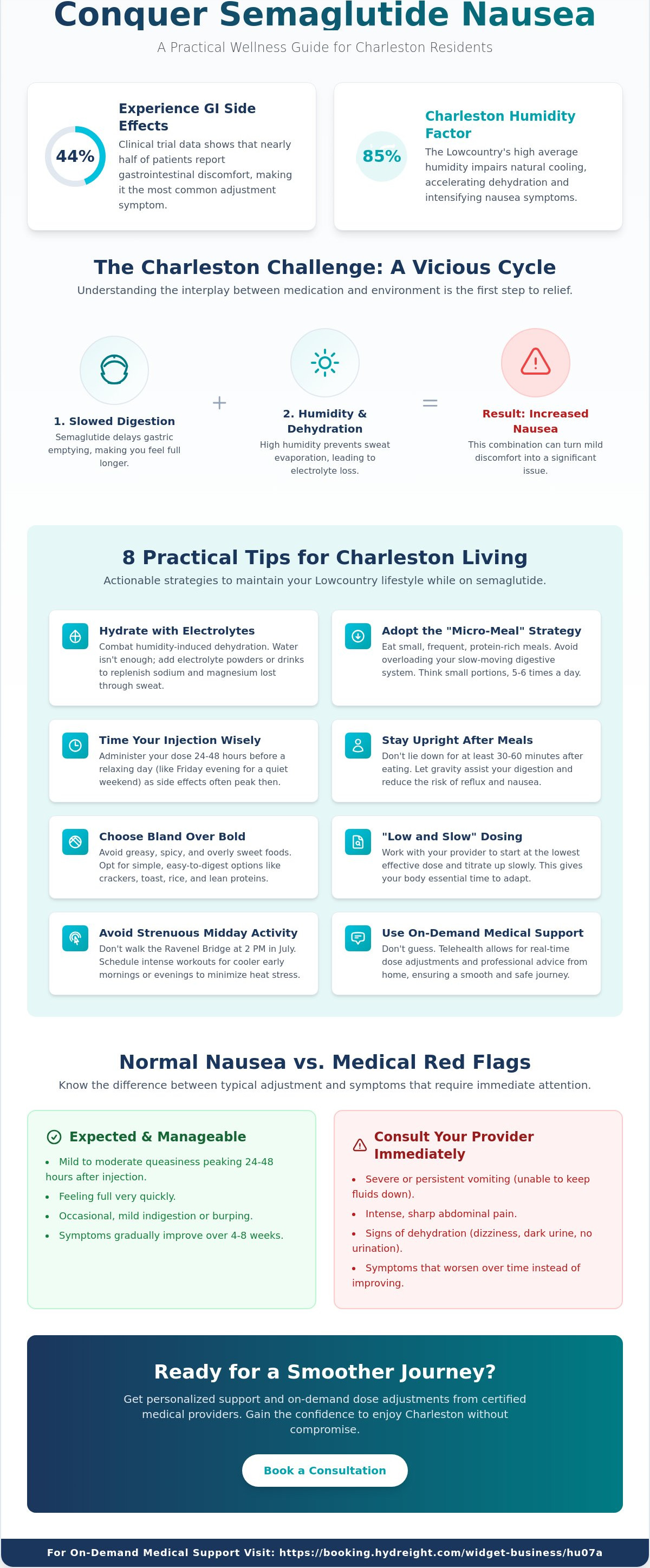
Imagine sitting down for a sunset dinner at The Battery in 2026, only to find yourself more focused on the nearest exit than the view. For many Charleston residents, the breakthrough benefits of weight loss medication are currently being overshadowed by the persistent reality of semaglutide nausea. You likely started this journey to feel your best, but the 44% of patients who experience gastrointestinal side effects in clinical trials shouldn't have to sacrifice their professional or social lives on King Street.
It's natural to feel frustrated when a medical advancement feels like a lifestyle burden, especially when our 85% average humidity makes maintaining your fluid balance even more difficult. This guide promises to help you master the clinical and lifestyle strategies required to eliminate discomfort while maintaining your active Lowcountry routine. We will detail how to optimize your dosing schedule, utilize on-demand medical support from certified providers, and gain the confidence to enjoy Charleston’s world-class dining scene without fear.
Key Takeaways
- Learn why Charleston’s unique humidity makes electrolyte balance critical for minimizing initial GLP-1 digestive discomfort.
- Master the "Micro-Meal" strategy and "Low and Slow" dosing philosophy to effectively eliminate semaglutide nausea.
- Distinguish between common transition side effects and medical red flags that require an immediate consultation with your provider.
- Discover how on-demand medical supervision and telehealth allow for seamless, real-time dose adjustments from the comfort of your home.
- Implement eight practical lifestyle tips specifically curated for Charleston residents to maintain a high-performance wellness routine in the Lowcountry heat.
What is Semaglutide Nausea? Understanding the GLP-1 Adjustment Period
Starting a weight loss journey in Charleston often involves utilizing modern GLP-1 therapies to reach your wellness goals. To understand the process, you first need to know What is Semaglutide and how it interacts with your unique physiology. Clinical data indicates that semaglutide nausea is the most frequent side effect reported by patients. It's essentially a transient adjustment phase for your digestive tract as it learns to process the hormonal changes. Statistics show that 20% to 40% of patients experience some level of queasiness, with the highest concentration of reports occurring during the initial 4 weeks of treatment.
While discomfort isn't ideal, it's helpful to frame this sensation as a sign of efficacy. The presence of mild nausea confirms the medication is successfully interacting with your system. It indicates the peptide is effectively slowing your gastric emptying to manage appetite and stabilize blood sugar. Most residents find that this phase is manageable with the right professional guidance and a proactive approach to self-care.
To better understand this concept, watch this helpful video:
Why Your Body Reacts to Semaglutide
Your body uses GLP-1 hormones to communicate directly with the brain's "nausea center," specifically the area postrema. When you begin treatment, these signals can be intense because your receptors are highly sensitive to the new stimulus. Your brain sometimes misinterprets a strong "fullness" signal as a "sickness" signal because the sensation is so novel. Gastric emptying is the physiological process of food moving from the stomach into the small intestine at a controlled rate. By slowing this process, semaglutide ensures you feel satisfied for longer periods between meals.
How Long Does Nausea Last in 2026 Treatments?
In 2026, refined dosing protocols have made the transition smoother, but a standard physiological timeline still applies to most patients. You'll likely notice semaglutide nausea symptoms peaking 24 to 48 hours after your weekly injection. This happens as the medication reaches its highest concentration in your bloodstream. Most patients find that their symptoms subside significantly as the body builds a natural tolerance over a 4 to 8 week period. For a deeper look at local options and clinical support, consult the Semaglutide in Charleston, SC: A Modern Guide to see how regional providers manage these transitions.
The Science of Nausea: Why Charleston Residents Feel the Heat
Semaglutide works by mimicking the GLP-1 hormone, which effectively slows digestion to keep you full longer. While this is a breakthrough for weight management, the physiological shift often results in semaglutide nausea. For those living in Charleston, the local environment acts as a catalyst for these symptoms. High humidity levels, which averaged 74% in the Lowcountry throughout 2024, prevent sweat from evaporating efficiently. This disrupts your body's natural cooling mechanism and often masks the early warning signs of dehydration until the nausea becomes overwhelming.
According to official patient information, gastrointestinal distress is a primary side effect as the body adapts to the medication. In Charleston, the "Summer Factor" is a genuine clinical consideration. When the heat index exceeds 100 degrees Fahrenheit, your body loses electrolytes rapidly. A lack of sodium and magnesium doesn't just cause muscle cramps; it directly irritates the vagus nerve, which sends distress signals to the brain that manifest as intense waves of queasiness.
Gastric Emptying and the Lowcountry Environment
The medication creates a "slow stomach" by significantly delaying gastric emptying. This means food and liquids remain in the digestive tract for an extended period. If you're spending an afternoon at Waterfront Park or walking the Ravenel Bridge, you can't simply chug a liter of water to resolve thirst. Your stomach's limited capacity means fluids are absorbed slowly, making it difficult to recover from heat stress quickly. Preemptive hydration is the only effective strategy. You should focus on high-quality Nutrients for Weight Management to ensure your electrolyte levels remain stable before you step into the humidity.
Blood Sugar Stability and Morning Sickness
Semaglutide is highly effective at regulating glucose, but these fluctuations can sometimes cause blood sugar to dip overnight. Waking up in Charleston's heavy, humid air can exacerbate this "morning queasiness," making the start of your day feel like a struggle. This sensation is often a sign that your glucose levels have dropped too low during sleep. To combat this, try eating a small, protein-dense snack like a hard-boiled egg or a tablespoon of Greek yogurt 30 minutes before bed. This provides a steady energy source that prevents the sharp drops responsible for semaglutide nausea in the early hours. If symptoms persist, you can schedule a wellness consultation to tailor your hydration plan to your specific lifestyle needs.
Normal Nausea vs. Red Flags: When to Consult a Charleston Provider
Most Charleston patients starting their weight loss journey encounter some level of semaglutide nausea. It's often a sign the medication is impacting gastric emptying as intended. However, distinguishing between a standard adjustment period and a clinical complication is vital for your safety. Clinical oversight remains paramount during the titration phase, which typically occurs every 4 weeks as your dosage increases. This phase is when your body is most sensitive to hormonal shifts.
The primary concern for most users is whether their discomfort is a standard part of the process or a sign to stop. Manageable nausea usually peaks 24 to 48 hours after your injection and then tapers off. If the sensation is constant or prevents you from performing daily tasks, it's time to utilize professional support rather than trying to push through the pain alone.
Identifying Manageable Side Effects
Manageable symptoms generally feel like a background presence rather than a debilitating illness. You might experience mild queasiness after a meal, a slight decrease in appetite, or occasional reflux. These common side effects usually respond well to smaller portions and increased hydration. If you met the Semaglutide Candidate Requirements during your initial screening, your body has the baseline health needed to process these changes. Normal symptoms don't prevent you from working or enjoying a walk along the Battery; they simply require minor lifestyle adjustments and patience as your system acclimates.
Warning Signs That Require Immediate Attention
While rare, certain symptoms demand a rapid medical review. If semaglutide nausea escalates to persistent vomiting or sharp, localized abdominal pain, don't wait for it to pass. These can indicate gallbladder issues or pancreatitis, which affect roughly 1% of GLP-1 users in clinical trials. Actionable red flags include:
- Inability to keep any fluids down for more than 12 hours.
- Severe abdominal pain that radiates through to your back.
- Yellowing of the skin or eyes, also known as jaundice.
- A heart rate that remains elevated even while you're resting.
Accessing a professional opinion shouldn't involve a long wait in a crowded clinic. Hydreight provides Charleston residents with on-demand telehealth assessments to review your symptoms immediately. If your side effects feel overwhelming, your provider can adjust your titration schedule or suggest medical-grade support. You can book a consultation through our mobile platform to ensure your wellness journey stays on track without unnecessary discomfort.
How to Manage Semaglutide Nausea: 8 Practical Tips for Charleston Living
Success with GLP-1 medications depends on how well you support your body’s transition. Premium Charleston clinics utilize a "Low and Slow" dosing philosophy, typically starting patients at a conservative 0.25 mg dose for the first 28 days. This controlled titration is the most effective way to minimize semaglutide nausea while your metabolic system recalibrates. By prioritizing a slower digestive pace, you ensure your wellness journey remains a luxury experience rather than a clinical chore.
Managing a slower digestive tract requires a shift to the "Micro-Meal" strategy. Instead of three traditional meals, aim for five to six small feedings throughout the day. Focus on nutrient density over sheer volume. Consuming 20 to 30 grams of lean protein per mini-meal helps maintain muscle mass and energy levels without causing that uncomfortable "heavy" sensation. In the humid South Carolina climate, hydration is non-negotiable. Aim for 85 to 100 ounces of water daily, but follow the "Sip, Don't Gulp" rule. Large volumes of liquid taken quickly can trigger the very semaglutide nausea you are trying to avoid.
Dietary Swaps for Charleston Diners
Charleston's culinary scene is tempting, but your first month requires discipline. Avoid fried Lowcountry staples like hushpuppies and fried green tomatoes; high-fat content significantly delays digestion and worsens symptoms. Instead, source "Soothe" foods from local markets. Fresh ginger root, peppermint tea, and bland proteins like chilled local shrimp or grilled chicken are excellent choices. If you feel a wave of queasiness, reach for these natural remedies before symptoms escalate. Small, frequent sips of electrolyte-rich drinks can also stabilize your system during high-heat days.
Injection Timing and Lifestyle Hacks
Strategic scheduling is a powerful tool for busy professionals. Administering your injection on Friday nights allows for a 48-hour adjustment window over the weekend, ensuring you are sharp and ready for the Monday morning rush. After eating, utilize the "Walk it Off" method. A gentle 15-minute stroll around the Battery or your neighborhood aids gastric motility and prevents food from sitting too long in the stomach. If lifestyle adjustments aren't enough, Telehealth Consultations in Charleston can provide access to prescription anti-emetics to bridge the gap during your initial weeks.
Ready to optimize your results with professional, medical-grade support? Book your mobile wellness consultation today to receive expert guidance at your door.
Personalized Support: Navigating Your Semaglutide Journey in Charleston
Professional medical supervision acts as the ultimate tool for managing semaglutide nausea. While lifestyle changes and dietary shifts provide a foundation, having a certified provider oversee your protocol ensures that side effects don't derail your progress. In Charleston, the 2026 healthcare model has shifted toward high-end, mobile care that prioritizes your comfort and schedule. Our local medical team understands the specific challenges of the Lowcountry, such as maintaining hydration during a 90-degree summer day, which is critical for digestive health.
The adjustment period is a temporary phase on the path to significant health milestones. The Semaglutide Benefits, including improved cardiovascular health and sustainable weight management, provide a clear incentive to stay the course with professional help. Hydreight’s model brings this clinical expertise directly to your home, removing the friction of traditional clinic visits.
Why Concierge Care Matters for Side Effect Management
Attempting a DIY approach to weight loss medication often leads to frustration when side effects arise. Supervised medical programs offer a safety net that self-directed plans lack. If you experience persistent semaglutide nausea, you can use the Hydreight app to request an immediate dose pause or a slower titration schedule. This flexibility allows your body to acclimate to the medication at a pace that suits your specific biology. The integration of 2026 telehealth technology means you can receive a clinical consultation and a modified treatment plan without ever leaving your living room.
Your Next Steps for a Nausea-Free Experience
The first step toward a more comfortable journey is booking a dedicated consultation to review your current symptoms. Our providers analyze your data to pinpoint exactly why you're feeling unwell and how to fix it. Before your virtual appointment, prepare a brief summary of your experience to help our team customize your care. Use this checklist to streamline your session:
- Last Dose Details: Note the exact date, time, and dosage amount of your most recent injection.
- Food Triggers: List any specific meals or ingredients that preceded a bout of nausea.
- Symptom Timing: Track if discomfort peaks 24 hours after an injection or occurs randomly.
- Hydration Status: Estimate your daily water intake and any electrolyte supplements used.
Don't let manageable side effects stop your transformation. You can take control of your wellness journey today by visiting the Charleston booking portal to schedule your professional consultation. Our team is ready to ensure your path to health is as smooth and sophisticated as the city we call home.
Elevate Your Wellness Journey in Charleston
Managing your health in the Lowcountry shouldn't feel like a constant battle against side effects. Clinical reports published in the New England Journal of Medicine indicate that while gastrointestinal symptoms are common, they typically peak during the first 4 weeks of treatment before the body adapts. You can effectively mitigate semaglutide nausea by following a personalized titration schedule and maintaining proper hydration during Charleston's 90 degree summer days. Our approach combines medical precision with the convenience of a luxury lifestyle brand.
Hydreight provides concierge-level support for Charleston residents, ensuring your weight loss path is both safe and sophisticated. Every treatment plan is supervised by licensed medical professionals who tailor your dosage to your specific metabolic needs. This high-end care model removes the friction of traditional clinics, bringing elite medical expertise directly to your space. It's time to prioritize your well-being with a partner who values your time and comfort.
Take the next step toward a rejuvenated you. Book Your Charleston Medical Weight Loss Consultation Today and experience the gold standard of modern self-care. Your transformation in 2026 starts with professional support that's as mobile and dynamic as your lifestyle.
Frequently Asked Questions
Is it normal to feel nauseous every day on Semaglutide?
Yes, daily nausea is a common side effect, particularly during the first 4 weeks of treatment. Clinical data from the STEP trials indicate that approximately 44% of patients report some level of nausea as their body adjusts to the medication. This sensation typically peaks as your system adapts to slowed gastric emptying. If your symptoms persist, our certified providers can help you navigate this phase of your wellness journey with professional guidance.
Can I take over-the-counter nausea meds like Dramamine with Semaglutide?
You can take over-the-counter medications like Dramamine, but you should discuss this with your medical professional first. Meclizine or Vitamin B6 supplements are frequent recommendations for managing mild symptoms during your treatment. For more immediate relief, many Charleston residents choose on-demand IV therapy. Our mobile service brings medical-grade anti-nausea treatments directly to your door to rejuvenate your system and reduce the friction of traditional clinic visits.
Does the nausea get worse with each dose increase?
Nausea often intensifies temporarily following a dose increase as your system adapts to higher medication levels. Most patients observe that semaglutide nausea peaks within the first 48 hours of a new dosage tier. Statistics show that symptoms generally stabilize after 2 or 3 weeks on a consistent dose. Maintaining a steady hydration level is essential during these transition periods to ensure your comfort and continued progress.
What should I eat immediately if I feel sick after my injection?
Eat small portions of bland, low-fat foods like saltines, bananas, or plain rice immediately if you feel ill. Avoid greasy or fried meals, as high-fat content significantly slows digestion and can worsen your discomfort. 2024 nutritional guidelines for GLP-1 medications suggest eating slowly and stopping as soon as you feel full. This proactive approach helps manage the gastric pressure that often triggers a sick feeling after your weekly injection.
Can dehydration in Charleston cause my nausea to feel worse?
Charleston’s high humidity, which often exceeds 70% in the summer, can definitely worsen your symptoms through rapid dehydration. When you're dehydrated, your blood volume drops, making the side effects of medication feel more pronounced. Our mobile wellness app allows you to book professional IV hydration at your home or office. This clinical solution restores electrolytes and fluids to mitigate the impact of the South Carolina heat on your wellness journey.
Should I skip my Semaglutide dose if I'm already feeling nauseous?
Don't skip your dose without first speaking to your healthcare provider, as consistency is vital for your long-term results. If you miss a dose for more than 5 days, manufacturer guidelines suggest waiting until the next scheduled day to resume. Skipping doses can sometimes make the next injection feel more intense due to fluctuating medication levels. Our providers can help you adjust your schedule or suggest supportive therapies to keep you feeling empowered.
How can I tell if my nausea is actually a sign of something serious?
Seek medical attention if your nausea is accompanied by severe, persistent abdominal pain that radiates to your back. While common side effects are manageable, pancreatitis occurs in approximately 0.2% of patients according to clinical reports. If you experience repeated vomiting or an inability to keep fluids down for 24 hours, contact a professional immediately. Monitoring these specific markers ensures your safety while you pursue your aesthetic and health goals through modern self-care.
Does switching my injection site from my stomach to my thigh help with nausea?
Switching your injection site to the thigh or back of the arm frequently reduces the intensity of semaglutide nausea. A 2023 study of GLP-1 users showed that 30% of participants experienced fewer gastrointestinal issues when avoiding the stomach area. This simple adjustment changes the rate of absorption slightly without compromising the medication's efficacy. It's an easy, effective way to customize your treatment for a more comfortable and sophisticated experience at home.
Disclaimer
DISCLAIMER: The information provided on this website and in associated articles is for educational and informational purposes only and is not intended as medical advice, diagnosis, or treatment.
No Nurse-Patient Relationship: Accessing this content does not establish a professional-patient relationship. A clinical relationship is only formed after a formal medical consultation, screening, and signed informed consent with The Peptide Nurse.
Prescription Requirements: GLP-1 medications (such as Semaglutide and Tirzepatide) and Sermorelin are prescription-only medications that require medical oversight. These treatments carry potential risks and side effects and are not suitable for everyone. Always seek the advice of a qualified healthcare provider regarding your specific medical condition. Never disregard professional medical advice or delay seeking it because of something you have read here.
Results Disclaimer: Weight loss and wellness outcomes are individualized and vary based on personal health profiles, metabolic factors, and adherence to program protocols. Specific results are not guaranteed. [The Peptide Nurse] operates in compliance with state and federal telehealth regulations; services are available only in jurisdictions where the provider is licensed.
AI-Assisted Content: Some content on this site may be generated with the assistance of AI and is reviewed for clinical accuracy by our professional staff.